|
Concrete Non Destructive Testing (Concrete NDT) comprises testing a property of concrete, largely without damaging the concrete to assess some parameter which either directly or indirectly provides a required characteristic of the concrete or its embedment's.
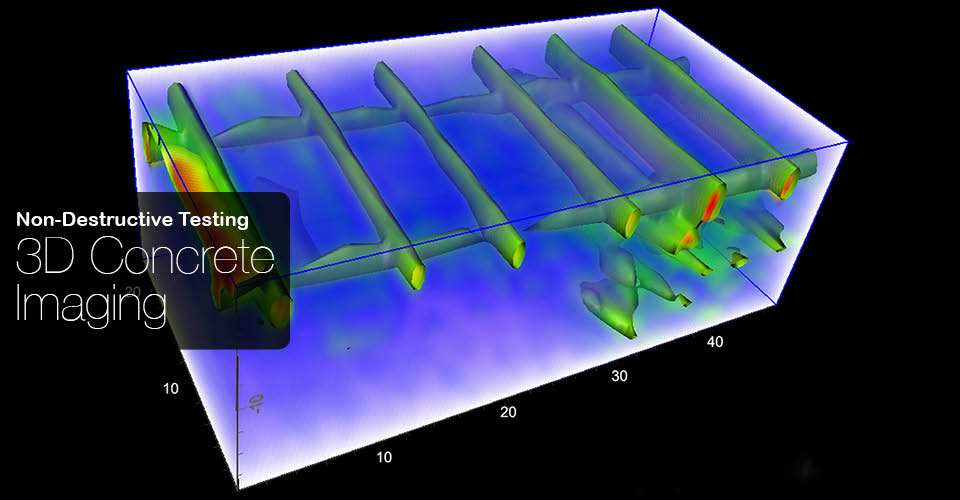
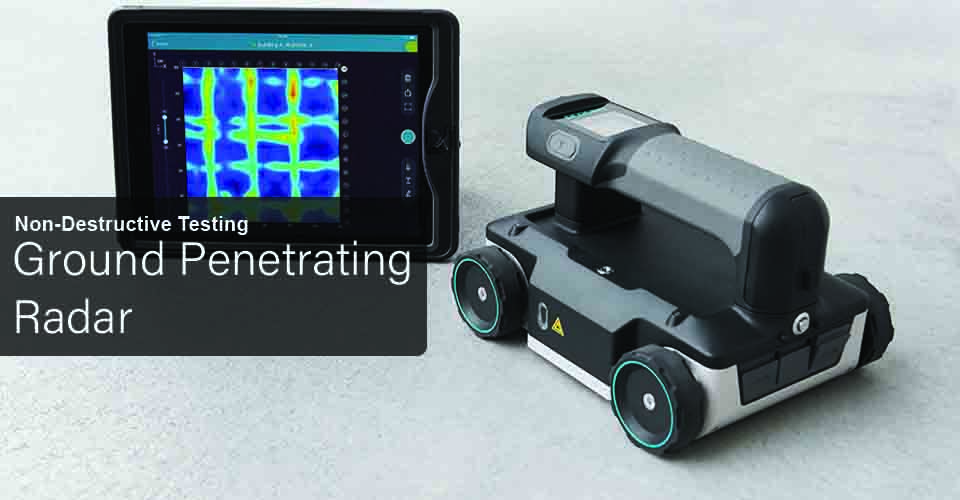
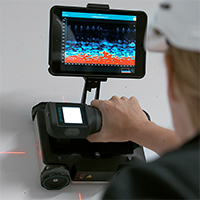
Some concrete testing methods have been around for 30-50 years but have improved dramatically since the introduction of the PC: cover meter, Schmidt hammer (rebound hammer), potentials, polarization resistance, moisture measurement, maturity. Other concrete testing methods are less than 10 years old and have only become viable since micro computers allowed rapid data collection and assessment (impact echo, impulse response, ground penetrating radar). All of these are commercial techniques that can be applied to give very useful information in construction and assessment of old structures.
PCTE have a long history in the development and assessment of concrete testing equipment. Whilst Reuben Barnes heads the sales team from PCTE Melbourne office he is supported by an expert team of Non-Destructive Testing engineers in Perth and Sydney. Our Sydney office is managed by Jeremy Szajer. Apart from sales and hire PCTE can arrange training courses for your staff.
PCTE is the newly formed entity: Papworths Construction Testing Equipment Pty Ltd. PCTE now handles all of the equipment sales and hire that Papworths Pty Ltd used to. This is purely a name change and you will enjoy all of the services that you have in the past.
18th of May 2010
Thank you to all that attended the Engineer Education Australia/PCTE course “Non Destructive Evaluation for QA and Condition Assessment of Concrete, Wood and Asphalt”. We had over 40 attend the course and learnt a lot more about what is possible with today's technology.
The primary course presenter Mr Larry Olson from Olson Instruments really enjoyed his time here in Australia. We hope to put the course on again in 2011. So for those who missed out you will get another chance.
19th of March 2010
PCTE in conjunction with Engineer Education Australia (a subsidiary of EA) are inviting NDE Practitioners and Specifiers to attend a new course entitled “Non Destructive Evaluation for QA and Condition Assessment of Concrete, Wood and Asphalt”. The course will be presented by Larry Olson of Olson Instruments. Larry is world reknowned for his work in the field on NDE of construction materials. He presents a multitude of courses worldwide and is known on our shores as well.
This two day course provides an overview of a range of techniques (existing and emerging techniques) for non-destructive evaluation for QA and condition assessment of concrete, wood and asphalt. Details are provided on the applications, strengths and limitations of each technique. It will run twice; once in Sydney (10-11/05/2010) and once in Melbourne (13-14/05/2010).
Practical demonstrations, detailed discussion and question/answer sessions will be conducted for each NDE method to ensure a practical and detailed understanding is gained by all participants.
Please follow the link here to find out more including a full course outline, pricing and registration.
Check out some of our great deals on second hand demonstator models. Most of the gear is only used on trials and for demonstrations so you can get a piece of equipment with minimal miles on it for a really great price. Take a look at this months great deals here...
PCTE have an extensive library of slides that they use in presentations covering a range of topics including: Schmidt Hammer (rebound hammer), maturity, pull off tester, air permeability, concrete ultrasonics, monitoring, absorption, carbonation, impact echo, radar (ground penetrating radar) and much more. Slides have been organised by product type but in the order that PCTE use them in slide shows. Lecture slides may be used by anyone and are not copyrighted.
PCTE did not just become a distributor of concrete NDT equipment. It started when we were looking for the best equipment for use on site surveys. Having selected Proceq’s Profometer cover meter, CANIN+ potential and resistivity equipment, and the DIGI-Schmidt as the best equipment of its type available we talked to Proceq Switzerland about supply.
One thing led to another and we ended up as exclusive distributor. Having decided to become a distributor of concrete NDT equipment we continued a policy of searching for the best equipment of its type for each item. We are now proud to represent :-
- Engius for maturity and concrete moisture
- Sensors and Software for Ground Penetrating Radar (GPR)
- Olsons Instruments for Impact Echo, and other pulse echo NDT’s
- BGB for corrosion monitoring
- Wexham Instruments
- ACSYS Ultrasonic Pulse Echo system
- JRC's Handy Search for Portable GPR
|
Head Office
Melbourne
L2 326 Keilor Rd, Niddrie
VIC 3042, Australia
Tel: 03 9938 3830
Fax: 03 9938 3899
Mob: 0408 034 668
Sydney
10 Dale St, Brookvale
NSW 2100, Australia
Tel: 02 9939 7177
Fax: 02 9939 7544
Mob: 0418 381 709
Perth
34 Kiln Rd, Nowergup
WA 6032, Australia
Tel: 08 9407 5363
Fax: 08 9407 4031
PCTE team have an extensive background in concrete Non Destructive Testing (NDT). 30 years ago Frank Papworth was involved in assessing ultrasonic's and gamma ray backscatter as a means of detecting defects in concrete. He also worked as part of a team developing corrosion assessment methods for marine structures.
Techniques such as potentials, resistivities and polarization resistance were evaluated as part of the Concrete in the Oceans programme in the UK and published in “Tongue Sands Tower Survey” the report of a major seminar at the Institution of Engineers UK in 1980. The team under Frank Papworth developed the first “Potential Wheel” and concrete four probe resistivity equipment. Many of these techniques have become common place today. But PCTE are still at the forefront of concrete NDT. For ex ample our "MD" Reuben Barnes has trained internationally on advanced NDT such as GPR and Impact Echo. He also has extensive field experience.
Whatever the equipment you require, whether you want to hire or buy, talk your needs over with PCTE first.
|