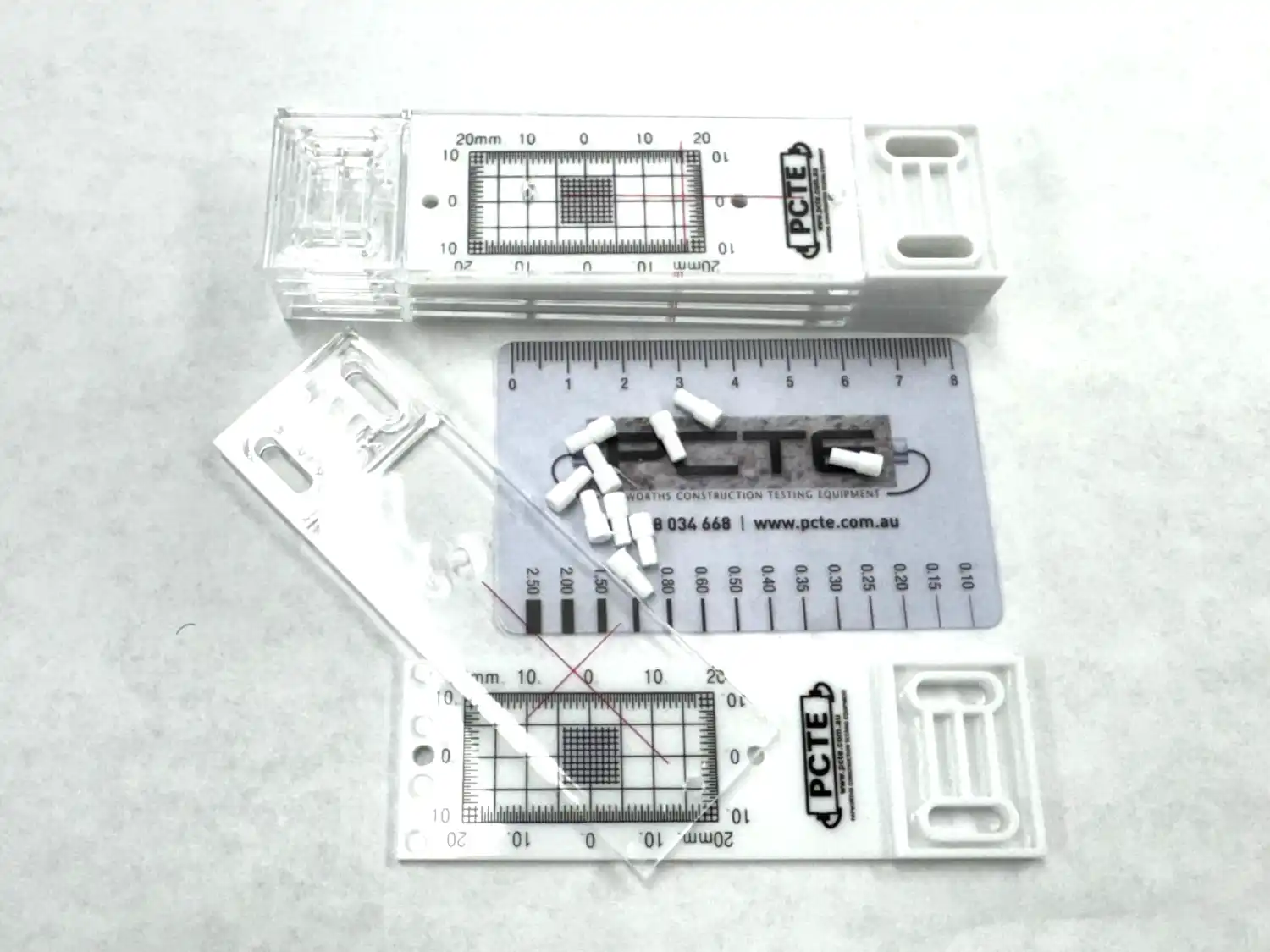
Crack-monitoring devices and sensors are installed around a suspected "live" crack, which remains in motion over time. The installer, or a data logging system, records changes in the width of the crack over time.
Crack monitoring is a crucial part of structural assessment and maintenance in concrete buildings, bridges, tunnels, and infrastructure. It helps identify structural weaknesses, potential failure risks, and environmental effects over time.
Why PCTE’s Crack Monitoring Equipment is the Industry Standard
When it comes to crack monitoring devices, PCTE provides innovative solutions to ensure your testing processes are accurate and effective. Here's why you should choose PCTE:
-
Industry Expertise: With over 20 years in the industry, PCTE is a leader in providing reliable crack monitoring solutions for construction, civil engineering, and infrastructure projects.
-
High Accuracy: Our crack monitoring equipment delivers precise measurements and real-time data, ensuring you can make informed decisions based on accurate insights.
-
Durable and Reliable: Built to withstand harsh environments, our equipment is durable and provides long-term reliability, ensuring minimal downtime and maintenance.
-
Comprehensive Support: We offer extensive technical support, including setup assistance, training, and ongoing support to ensure you get the most from your crack monitoring devices.
-
User-Friendly: Designed for ease of use, our equipment is intuitive, making it accessible for both seasoned professionals and those new to structural monitoring.
Applications of Crack Monitoring Equipment
Crack monitoring devices are used in a wide range of applications to assess the condition and integrity of structures. Key applications include:
-
Concrete Structures: Used to monitor cracks in bridges, tunnels, dams, and buildings, ensuring structural integrity over time.
-
Masonry: Essential for monitoring cracks in walls, foundations, and other masonry structures.
-
Industrial Equipment: Used to monitor cracks in critical machinery or industrial installations that may affect safety and functionality.
-
Construction Monitoring: During construction projects, crack monitoring devices help track the development of cracks and assess their impact on the structural safety of the project.
These devices help engineers, inspectors, and maintenance teams detect cracks early and take the necessary actions to prevent further damage.
Explore More
PCTE offers a complete selection of crack monitoring devices and related products to support your structural monitoring needs:
-
Construction Testing Instruments & Tools: A wide variety of tools designed for testing the integrity of construction materials, including crack detection.
-
Software Solutions: Software designed for managing and analysing data collected from crack monitoring equipment, providing insights into structural health.
-
Non-Destructive Testing (NDT): Our NDT tools, including GPR equipment, enable non-invasive monitoring of cracks without causing additional damage to the structure.
-
CMT Laboratory Equipment: For in-depth testing and analysis of concrete and other materials, including crack monitoring applications.
-
GPR Equipment: Ground Penetrating Radar systems that assist in detecting cracks and voids beneath the surface, providing comprehensive insights for better decision-making.
Warranty & Returns
We stand behind the quality and durability of our crack monitoring equipment. If you encounter any issues with your equipment, our team is here to assist you. Please refer to our Warranty & Returns Policy for more details, or contact us via our Contact Us page for assistance.
Shipping & Delivery
PCTE ensures the fast and reliable delivery of all crack-monitoring devices. Delivery times may vary based on location, but we strive to provide timely service. For shipping details, please refer to our Shipping & Delivery Policy or reach out to our Contact Us page for inquiries.
FAQs
How accurate is crack monitoring equipment?
Crack monitoring devices are highly accurate, providing precise measurements that can detect even the smallest changes in crack width or displacement. The accuracy depends on the type of device used, with some systems capable of measuring movements as small as 0.01mm. This level of precision ensures reliable data that helps engineers and project managers make informed decisions about structural health and necessary interventions.
What is the best way to install crack monitoring devices?
Proper installation of crack monitoring devices is crucial for accurate results. The installation process varies depending on the type of monitoring system. For devices such as strain gauges or displacement meters, ensure they are properly aligned with the monitored crack and securely attached to the surface. Pre-installation planning is essential to select the best location on the structure to ensure accurate readings.
Can crack monitoring devices be used on all types of surfaces?
Yes, crack-monitoring equipment is versatile and designed for use on a wide range of surfaces. These devices can monitor cracks in concrete, steel, masonry, and even composite materials. Whether you're testing the structural integrity of a bridge, a building foundation, or industrial equipment, crack-monitoring devices can be effectively applied. The choice of device and installation technique will depend on the material type and the severity of the cracks.
Do I need special training to use crack monitoring equipment?
While crack-monitoring devices are designed to be intuitive and easy to use, understanding the basics of structural monitoring and interpreting the data is essential. Some devices may require a deeper understanding of materials and crack progression. To maximise the effectiveness of your crack monitoring equipment, we recommend receiving training to familiarise yourself with the device’s features, installation process, and data interpretation.
How often should crack monitoring devices be calibrated?
Calibration frequency depends on the type of crack monitoring equipment and the environmental conditions in which it is used. Most devices, especially displacement meters and strain gauges, should be calibrated periodically to ensure accurate readings. Typically, calibration is recommended every 6-12 months or after significant environmental changes, such as temperature fluctuations or heavy rainfall.

%20vector%20logo.svg)