The Cover Meter Method is a non-destructive testing technique used to measure the concrete cover depth over reinforcement bars (rebar) and locate embedded metal objects. It ensures compliance with structural designs and prevents corrosion risks.
What is a cover meter used for?
The most common application of a cover meter is to measure the distance between the concrete surface and the closest face of embedded reinforcing steel bars, the cover depth.
Proceq cover meters will also act as rebar locators and include a limited capacity to estimate the rebar diameter of isolated reinforcing bars. This estimation should not be used in place of exposing a rebar to measure its diameter, as there are many possible sources of interference with this measurement.
Other applications include locating the position of steel ties in masonry or brickwork and 2D and 3D visualisation of rebar layouts.
How accurate is a cover meter?
The depth measurement of a cover meter is very precise, typically ±1 mm of the actual depth, with a range of 40 mm. This accuracy is achievable when the user has correctly entered the reinforcing diameter from the design information of physical bar measurements.
This procedure and webinar content explain the correct process for locating and measuring individual bar cover depths.
Reinforcing diameter estimation may overestimate or underestimate bar diameter size and should not be used as a measurement for quality control.
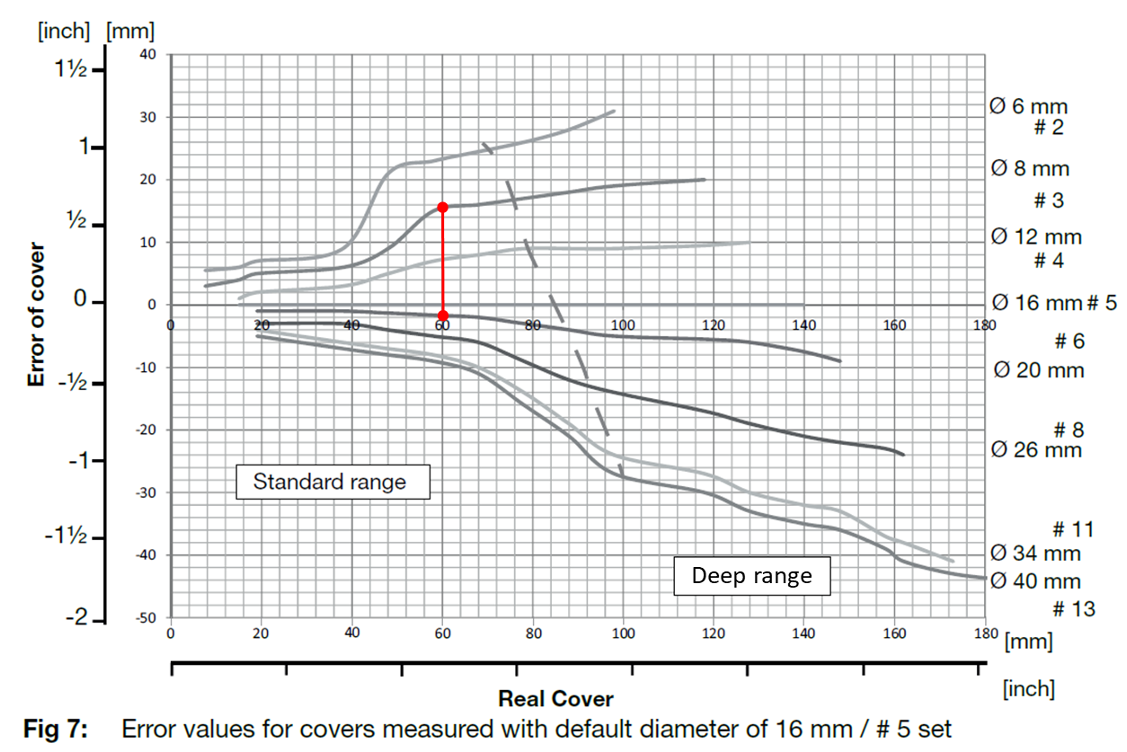
When a reinforcing bar diameter is unavailable, users may assume a minimum and maximum likely bar diameter and manually calculate the potential error from the manufacturer's performance specifications, as shown below.
What materials will a cover meter detect?
Cover meters that use pulsed eddy current will respond to any metal within their electromagnetic field. When aligned correctly over a single reinforcing bar, they will correctly measure the cover depth to that bar.
Lapped reinforcing will be measured incorrectly, and any other metallic target will be reported with an incorrect depth. Non-metallic rebar cannot be detected with a cover meter, but it may be located using ground-penetrating radar.
PCTE: The Premier Choice for Concrete Cover Meter
At PCTE, we provide the most advanced and reliable cover meters to support your concrete testing needs. Here’s why you should choose PCTE for your concrete cover meter and cover meter test procedure:
-
Industry-Leading Accuracy: Our concrete cover meters are known for their high precision, providing accurate measurements of rebar depth and cover thickness. With easy-to-use features, they deliver consistent and reliable results.
-
Non-Destructive Testing: Cover meters are ideal for non-invasive inspections of concrete structures, allowing for detailed analysis without damaging the material.
-
User-Friendly Design: Our concrete cover meters feature intuitive controls, making it simple to use even for beginners. The equipment is designed to streamline your testing processes and improve efficiency.
-
Durability and Reliability: Built to withstand tough environments, our cover meters are durable, providing long-lasting performance in both field and laboratory settings.
-
Comprehensive Support: PCTE offers expert support and training, ensuring you can get the most out of your cover meter and understand the results from the cover meter test procedure.
Concrete Cover Meter Testing: Why Choose It for Your Project?
Concrete cover meters are essential for determining the thickness of concrete covering the reinforcing steel in a structure. This information is vital for assessing the durability and strength of concrete elements, particularly for structures exposed to harsh environmental conditions. Cover meters provide quick, real-time readings that help ensure proper cover is maintained during construction and during monitoring of existing structures.
The cover meter test procedure is simple, efficient, and non-destructive. By measuring the depth of the concrete cover over rebar, you can assess the protection of the steel reinforcement from corrosion and other environmental factors. This is particularly important for the longevity and safety of concrete structures like bridges, buildings, and highways.
Explore More
At PCTE, we offer a wide range of cover meters and related products to help you efficiently measure and analyse concrete cover and reinforcement depth:
-
Construction Testing Instruments & Tools: Our full range of construction testing instruments complements concrete cover meters, providing you with the right tools for comprehensive material analysis.
-
Software Solutions: Our advanced software solutions make it easier to manage, analyse, and store data collected from cover meters, streamlining the report generation process.
-
Non-Destructive Testing (NDT): In addition to cover meters, we offer NDT equipment for detailed structural evaluations without damaging materials.
-
CMT Laboratory Equipment: Our CMT laboratory equipment provides essential tools for laboratory-based testing of concrete and other construction materials.
-
GPR Equipment: Ground Penetrating Radar (GPR) is used for subsurface analysis, which can complement cover meter tests by providing insights into the location and condition of reinforcement.
Warranty & Returns
PCTE offers a warranty on all concrete cover meters to ensure they remain in excellent working condition. If your cover meter is defective or damaged, please contact us during the warranty period to arrange a replacement or repair. Returns are accepted within 7 days for unused equipment in its original condition. For more details, refer to our Warranty & Returns Policy or contact us via our Contact Us page.
Shipping & Delivery
PCTE ensures reliable, timely delivery of all concrete cover meters. Shipping times may vary by location, but we aim to provide fast service for your convenience. For more details, please refer to our Shipping & Delivery Policy or contact us via our Contact Us page for shipping-related inquiries.
FAQs
What is the cover meter test procedure?
The cover meter test procedure involves placing the cover meter directly on the concrete surface and activating the device to measure the distance from the surface to the rebar. The device uses electromagnetic signals to detect reinforcement and calculate the depth of the concrete cover. Results are displayed on the device's screen in real time.
How accurate is the concrete cover meter?
Our concrete cover meters provide high accuracy in measuring concrete cover depth and locating rebar, with a typical accuracy of ±1-2mm. However, accuracy can vary depending on factors such as concrete type, reinforcement size, and the quality of the concrete surface. Regular calibration is recommended to maintain precision.
Can cover meters be used on all types of concrete?
Yes, cover meters are versatile and can be used on most types of concrete, including reinforced, pre-stressed, and lightweight concrete. The devices are suitable for testing new concrete installations and for inspecting older concrete structures to assess rebar depth and condition. Only SFRC is known to cause major issues.
Do I need to prepare the surface before using the cover meter?
While cover meters are designed for non-destructive testing, the concrete surface should be clean and free of large debris, dirt, or coatings. The cleaner the surface, the more accurate the measurement. If the surface is highly textured, smoothing it slightly can improve the results.
How do I interpret the results from the concrete cover meter?
The cover meter provides a direct reading of the concrete cover thickness. Some models also allow you to locate the depth of rebar and other reinforcement in the concrete. The results can be used to assess whether the concrete cover meets the required durability standards, especially in environments prone to corrosion.
Can a cover meter detect corrosion in rebar?
While cover meters primarily measure the depth of concrete cover over reinforcement, they are not designed to detect corrosion directly. For corrosion detection, electrical resistance or half-cell potential tests may be more suitable. However, cover meter tests can help identify areas that may be at risk of corrosion by showing inadequate cover over rebar.
How often should I calibrate my concrete cover meter?
Calibration of the concrete cover meter should be performed regularly to maintain accuracy, especially when used in varying environmental conditions. Calibration frequency can depend on the manufacturer's guidelines, but it should typically be done every 6-12 months or whenever you notice inconsistencies in the readings.


%20vector%20logo.svg)


