%20vector%20logo.svg)


Phone: 02 9453 9999 or Email: sales-operations@pcte.com.au

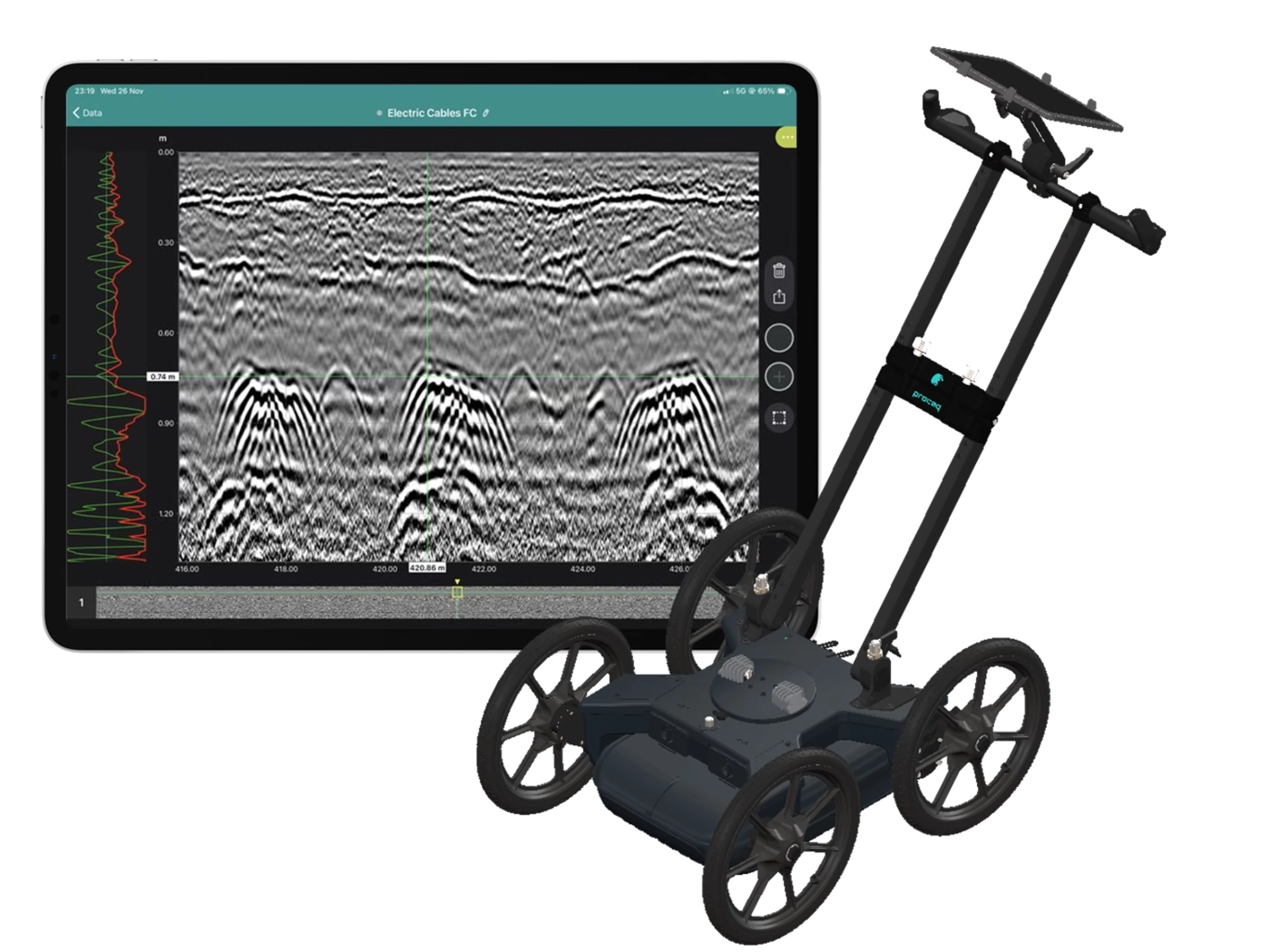
The Proceq GP8800 is a ultracompact, wireless, ground penetrating radar (GPR) system for concrete. It is used as a concrete scanner to locate rebar, post tensioning, embedded conduits and other embedded objects, with the ability to fit into tighter places than other GPR.
Overview | GX1 vs GX2 | SUE & Utilities | Structures & Pavements | Software & Outputs | Case Studies | Specifications | Support
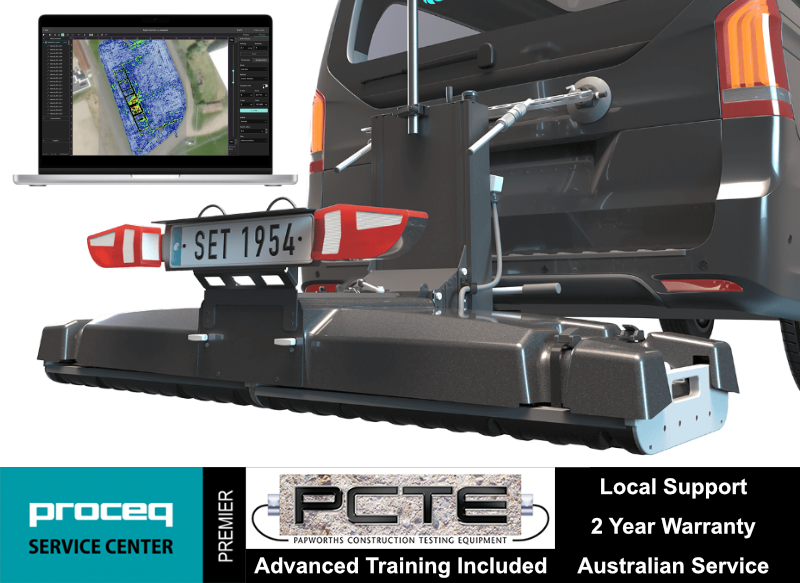
Collect high-density, georeferenced GPR data across wide areas and view the subsurface in 3D as you scan. Choose the GX2 array for SUE and utility mapping, or the GX1 array for structural, bridge and pavement investigations.
Best suited to:
Best suited to:
Recommended array: GX2
Recommended array: GX1
Cover more ground
Collect multiple parallel profiles in one pass instead of uilding a grid line by line.
See results during acquisition
View georeferenced radargrams and time-slice information in the field rather than waiting until the data is returned to the office.
Produce repeatable mapped data
Combine wheel-positioned GPR data with GNSS, project coordinates and survey linework.
Use one platform for two very different applications
Exchange GX1 and GX2 arrays without purchasing two complete cart platforms.
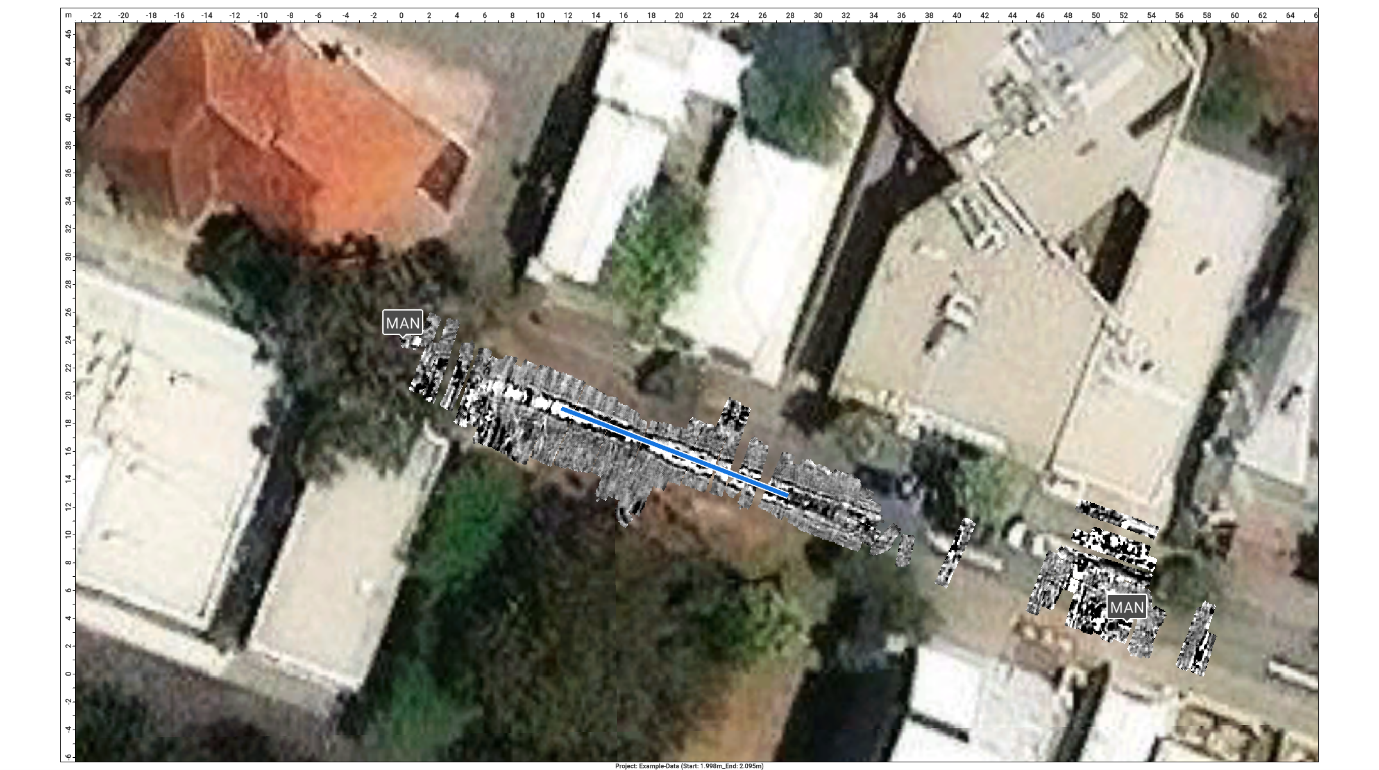
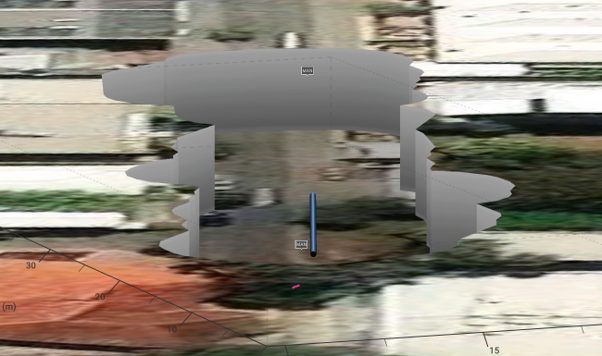
The GX2 transforms the GS9000 into a high-density subsurface utility mapping system. Its 11-channel, low-frequency GPR array captures an 83 cm-wide swath in each pass, helping operators detect and map buried pipes, ducts, cables, voids and other subsurface features. Live georeferenced data lets SUE teams review coverage on site and produce accurate CAD, GIS and project-coordinate deliverables.
1. Plan the survey
Load satellite imagery, CAD information, project coordinates or survey control.
2. Collect dense multichannel data
Survey an approximately 0.82 m-wide swath with 11 channels in each pass.
3. Review data live
Examine radargrams, georeferenced time slices and marked features while still on site.
4. Interpret and digitise
Add points, linework, tags, photographs and field observations.
5. Process and deliver
Merge survey areas, apply processing and export mapped information for the customer’s CAD, GIS or reporting workflow.
View the images below to see these in action.
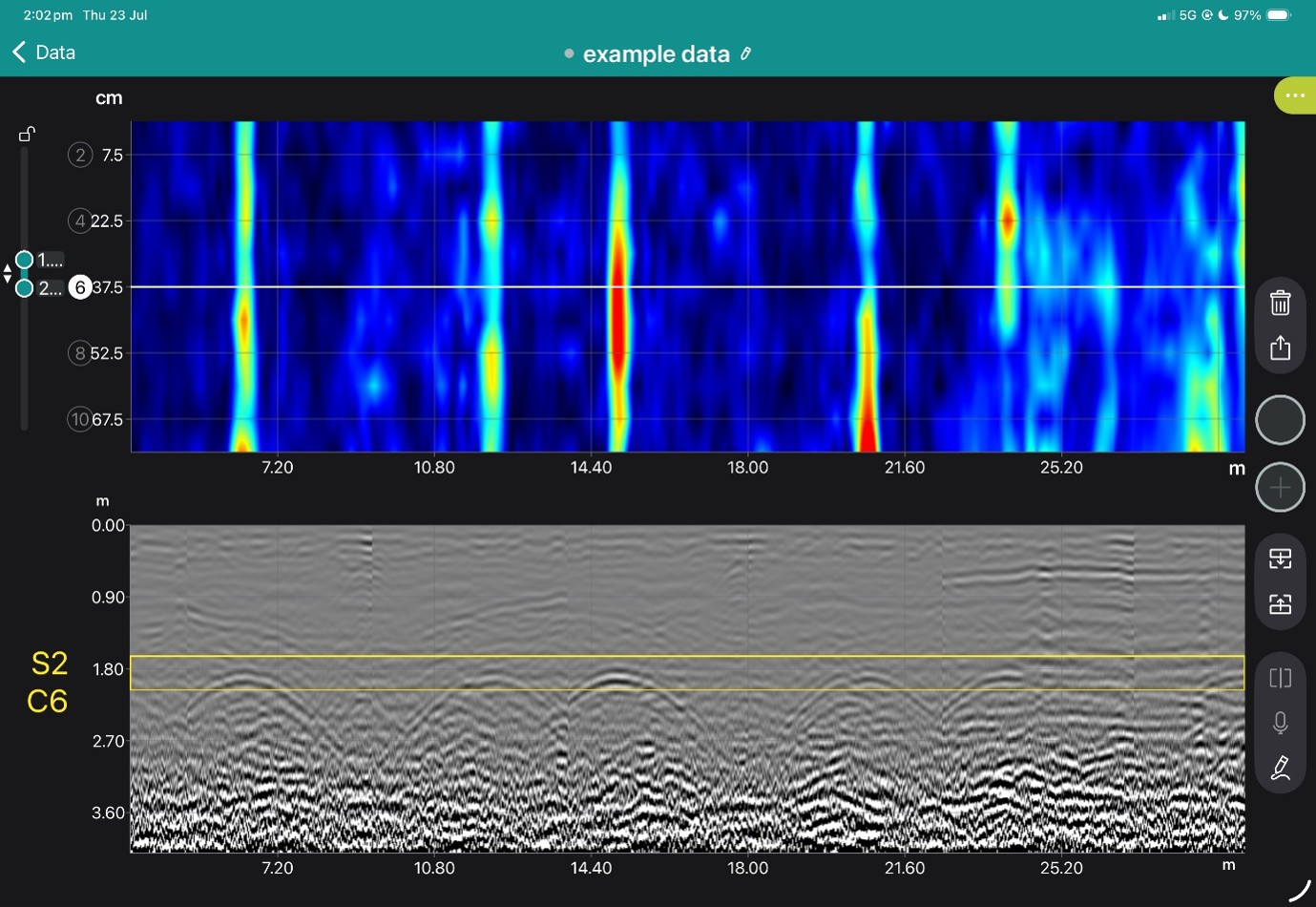
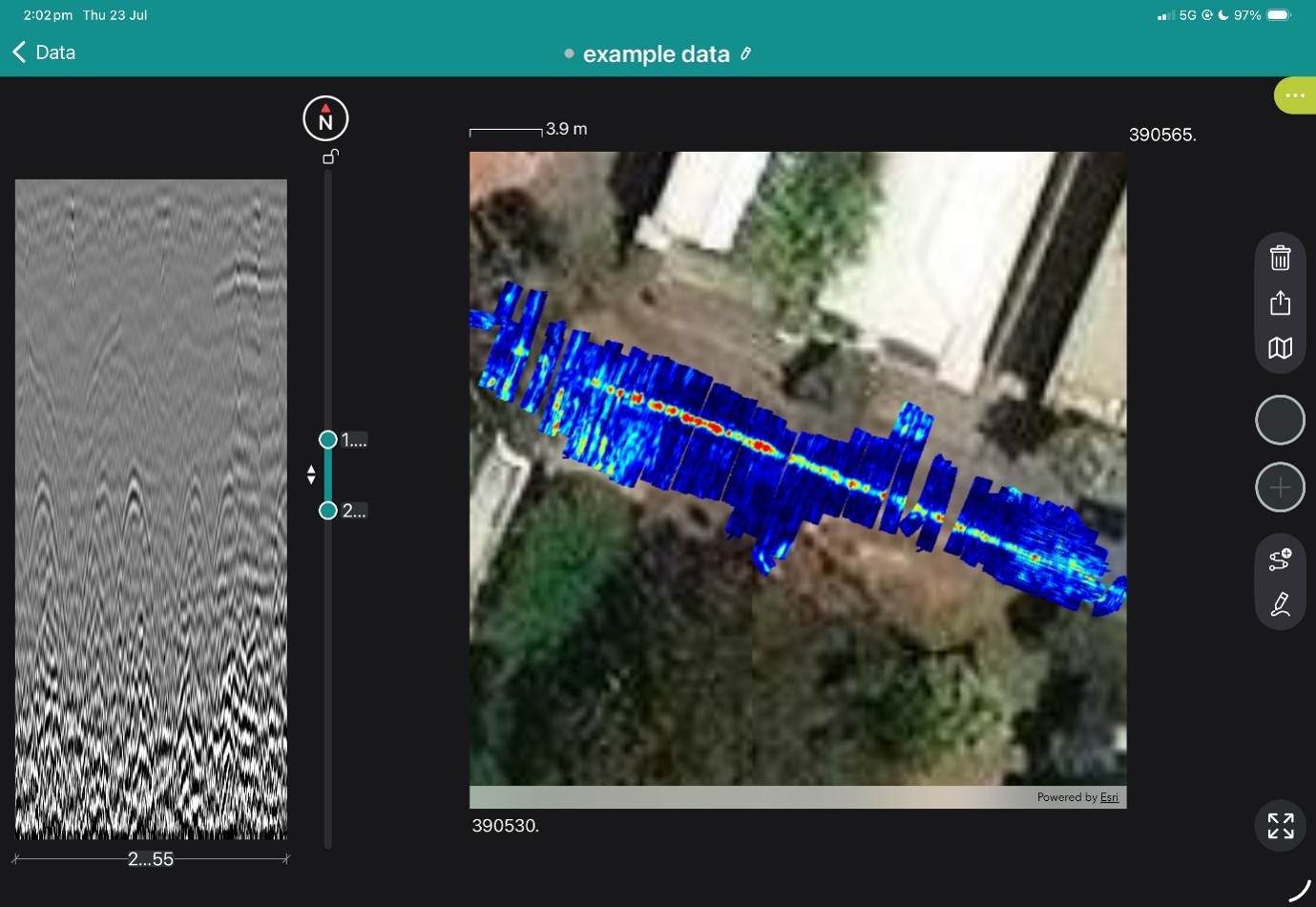
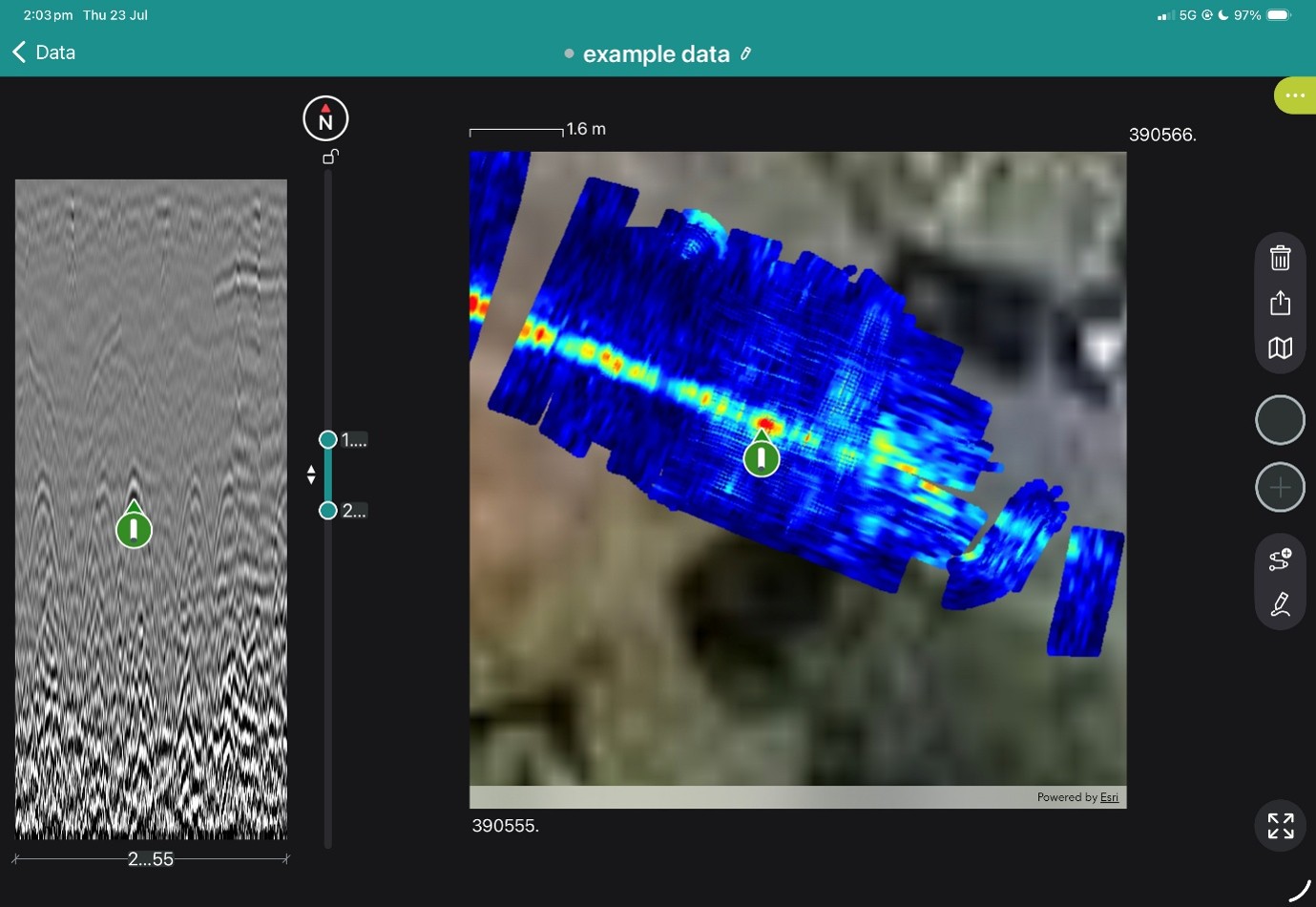
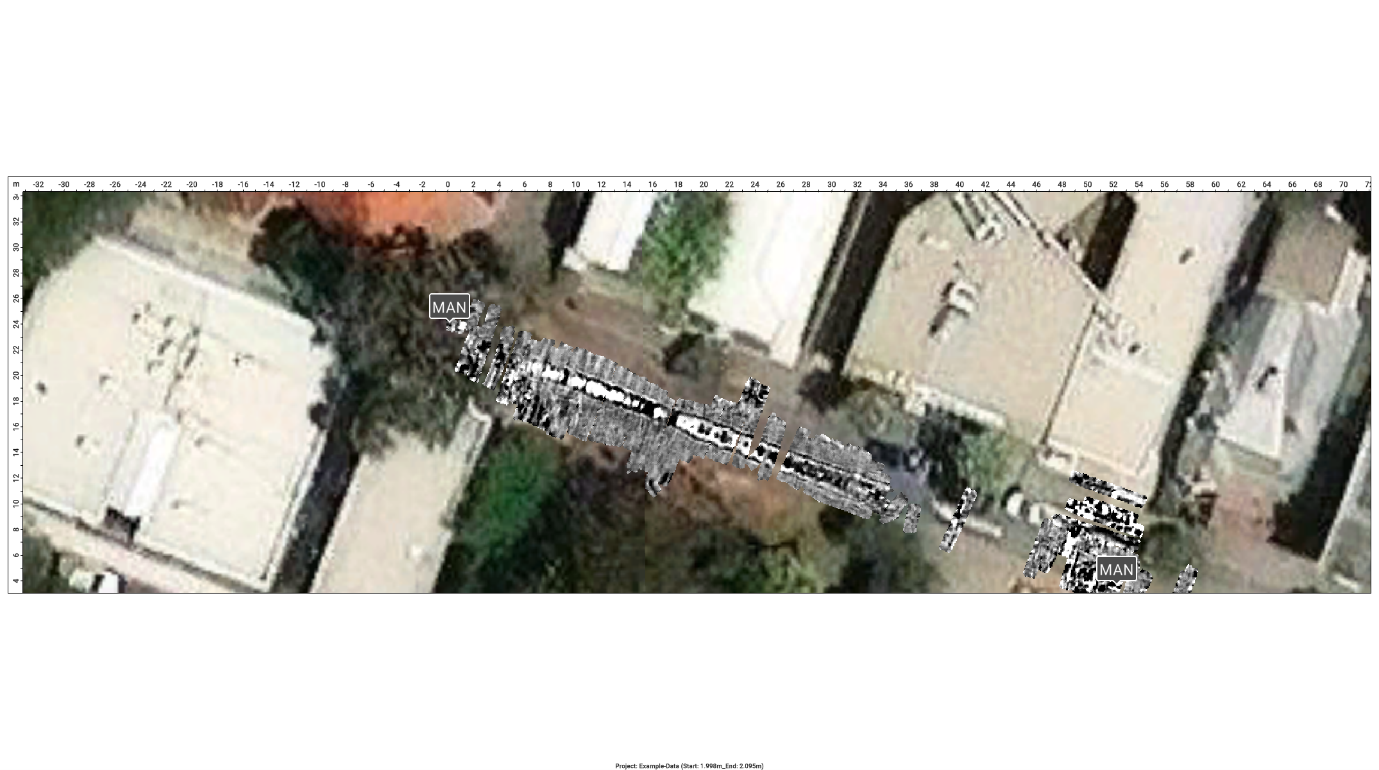

The GP8800 Ground Penetrating Radar is a high-performance, handheld GPR system designed for advanced concrete inspection and structural imaging. It is positioned for professional users who need clear subsurface data in demanding construction and infrastructure environments, including confined areas, congested reinforcement layouts, walls, slabs, bridge decks and parking structures.
Using advanced stepped-frequency continuous-wave radar technology, the GP8800 supports fast, high-density data collection with immediate 2D, 3D and augmented reality review options. It is suited to engineers, asset owners, consultants and NDT technicians who need reliable field insight without compromising portability or workflow efficiency.
At just 62 mm tall the GP8800 GPR concrete scanner can slide into places no other antenna can reach, showing a measurement within 45mm of the edge of the probe.
Hardware and portability:
Data quality and scanning performance:
Usability and interpretation:
The onboard firmware enables the GP8800 to acquire and process wideband GPR data using stepped-frequency continuous-wave measurement. This supports efficient scanning across shallow and deeper target zones while maintaining practical resolution for concrete inspection.
Firmware-driven acquisition and review modes help streamline field operation, allowing users to move from scanning to interpretation without unnecessary workflow interruption. Updates and workflow improvements can support better usability, more efficient processing and improved field productivity over time.
The GP8800 operates with the Proceq GPR software ecosystem, supporting field acquisition, visual review, annotation, reporting and data sharing. The app-based workflow is designed for practical site use, allowing technicians and engineers to capture measurements, review results and document findings while still in the field.
Together, the field app and post-processing workflow give users a practical balance of ease of use and advanced analysis capability, helping convert GPR data into clear inspection outcomes.

Book a SUE Workflow Demonstration
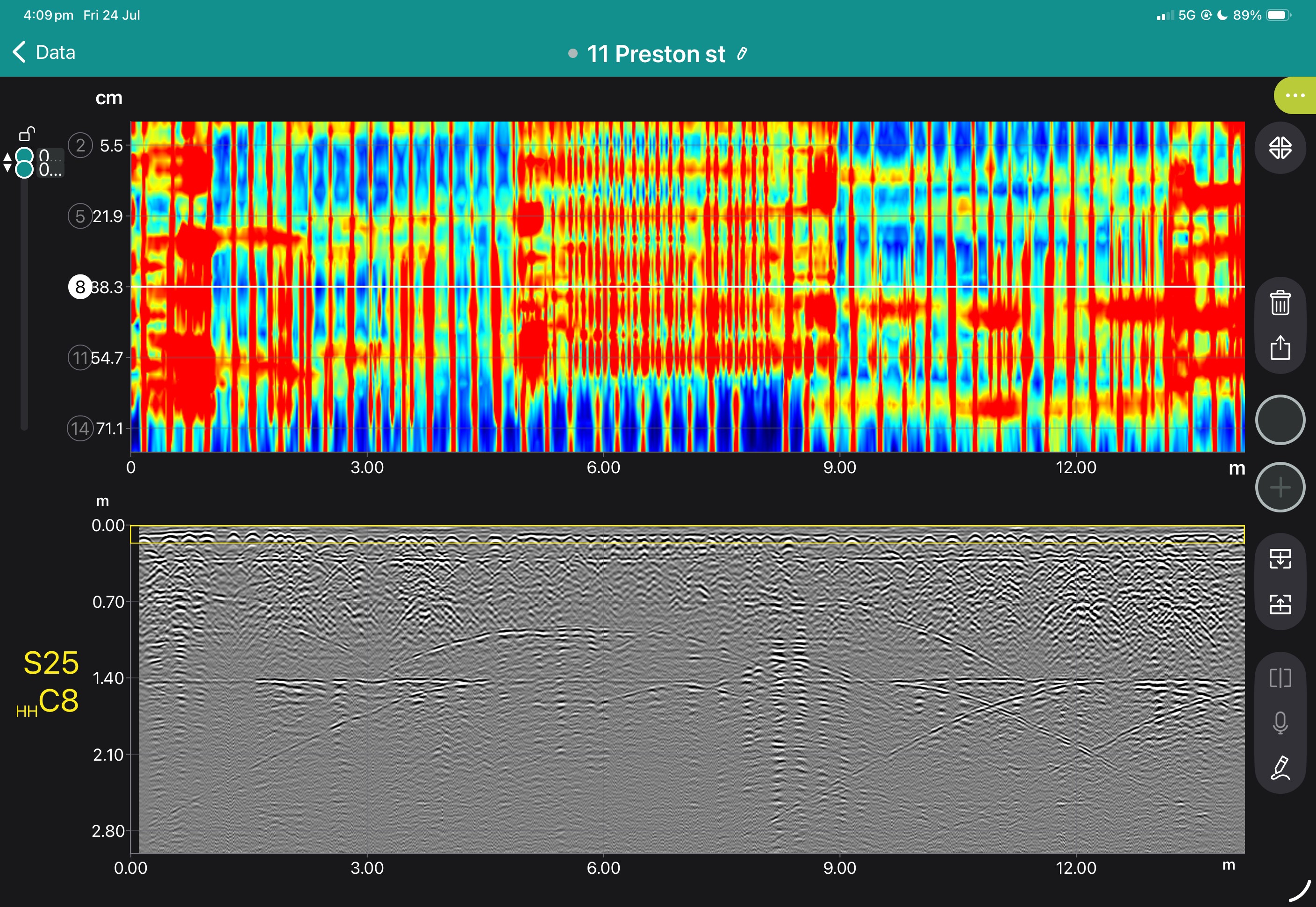
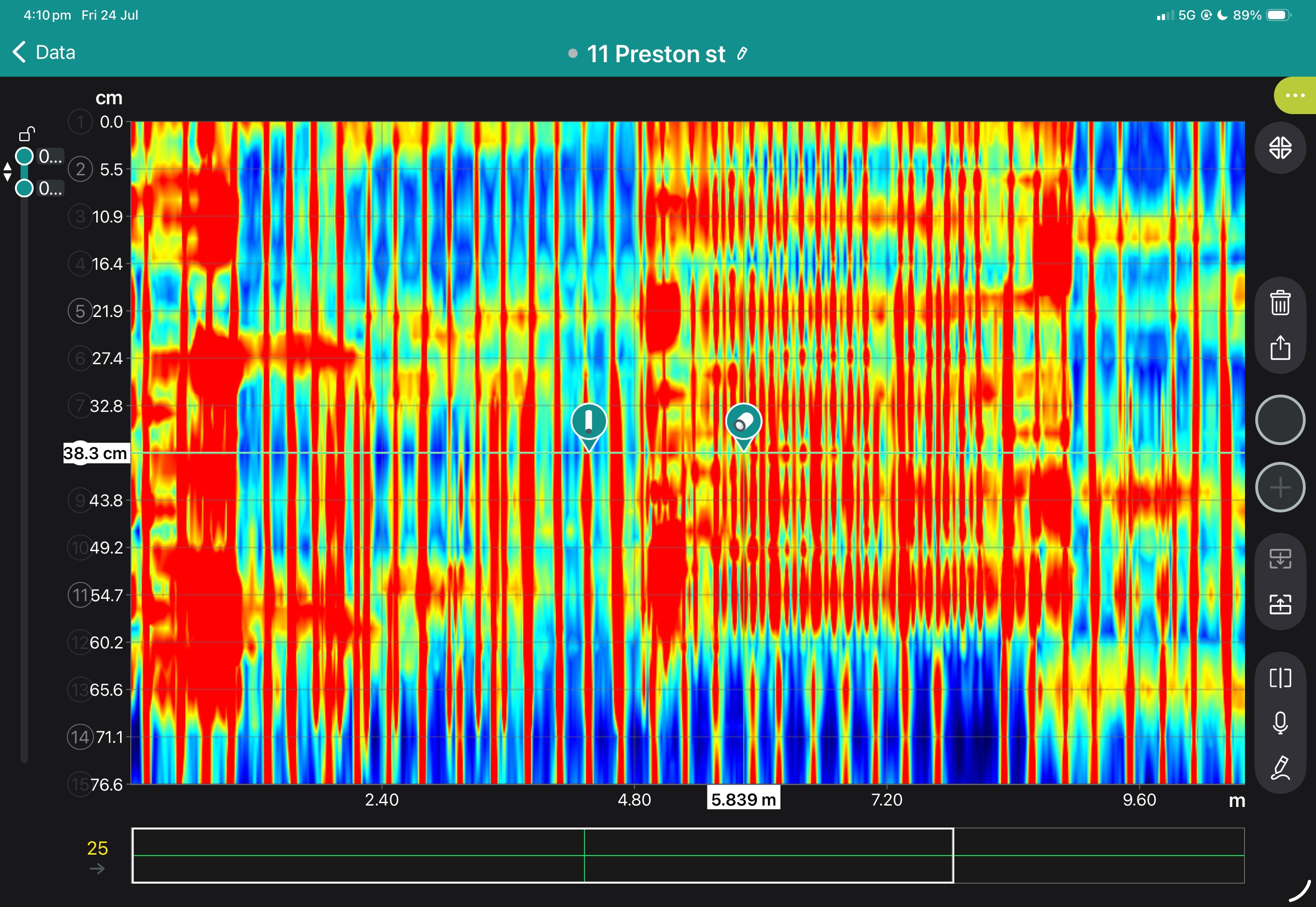
The GX1 transforms the GS9000 into a high-resolution structural assessment system for concrete slabs, bridge decks and pavements. Its dense, dual-polarisation array captures detailed 3D data across wide areas, supporting reinforcement and cover mapping, moisture and deterioration assessment, and analysis of asphalt and pavement layers. Live visualisation helps confirm survey coverage on site, while post-processing tools produce clear, report-ready condition maps.
1. Define the inspection area
Import the structure, bridge, pavement or survey background.
2. Collect closely spaced profiles
Capture 35 longitudinal and 15 cross-polarised channels with dense spacing.
3. Review coverage in the field
Use live radargrams and time slices to confirm that the required area has been captured.
4. Process the dataset
Apply velocity, gain, background removal, migration, filtering and topographic correction as appropriate.
5. Generate diagnostic maps
Create depth slices, reinforcement maps, layer information or application-specific condition maps.
6. Integrate with the engineering assessment
Export figures, mapped anomalies and raw data for inclusion in the engineer’s final interpretation and report.
Field information
Processed Diagnostic Information
Engineering deliverables
View some of these features at work below, and our case study if you'd like to see more of what the GS9000 can do.




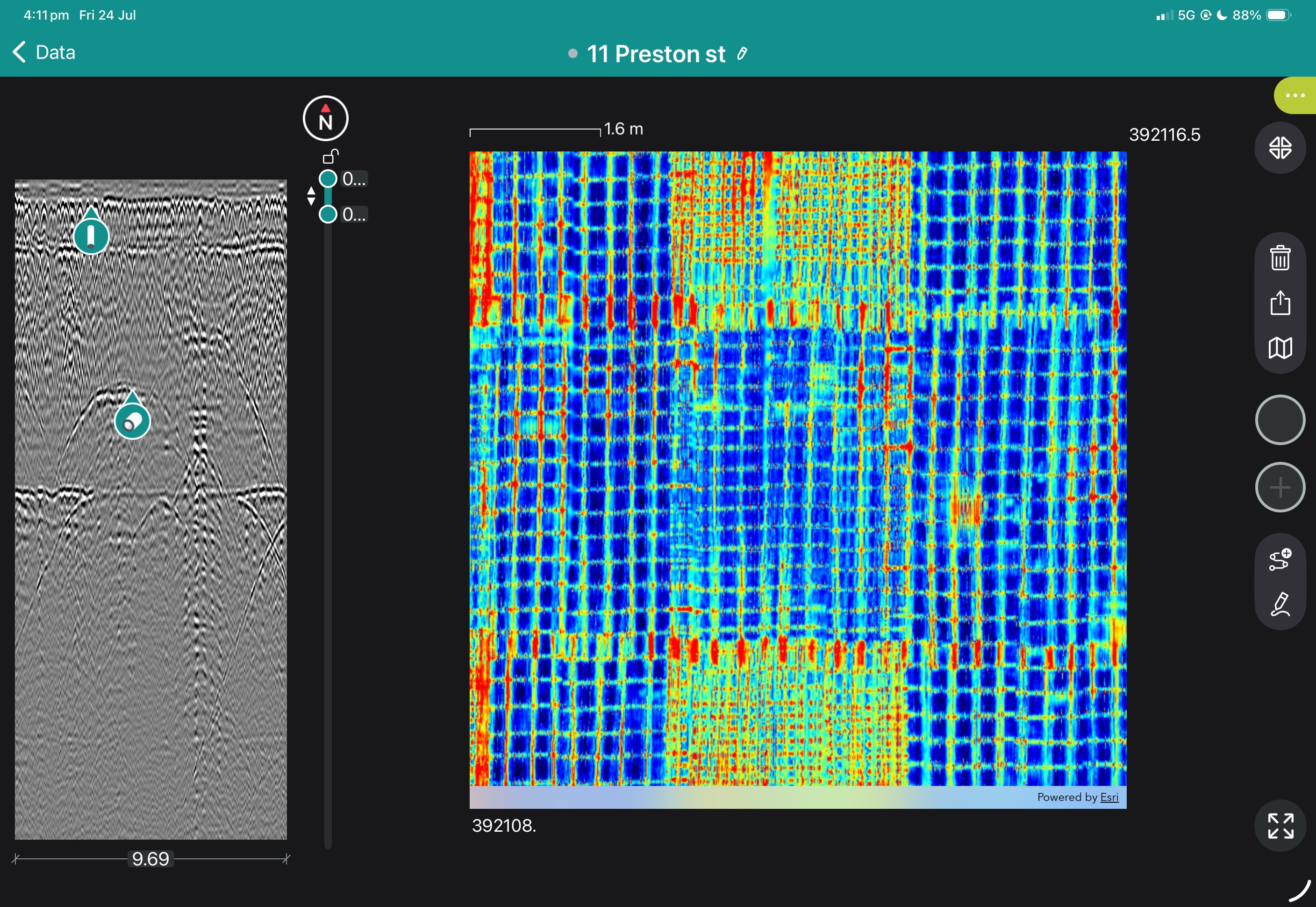
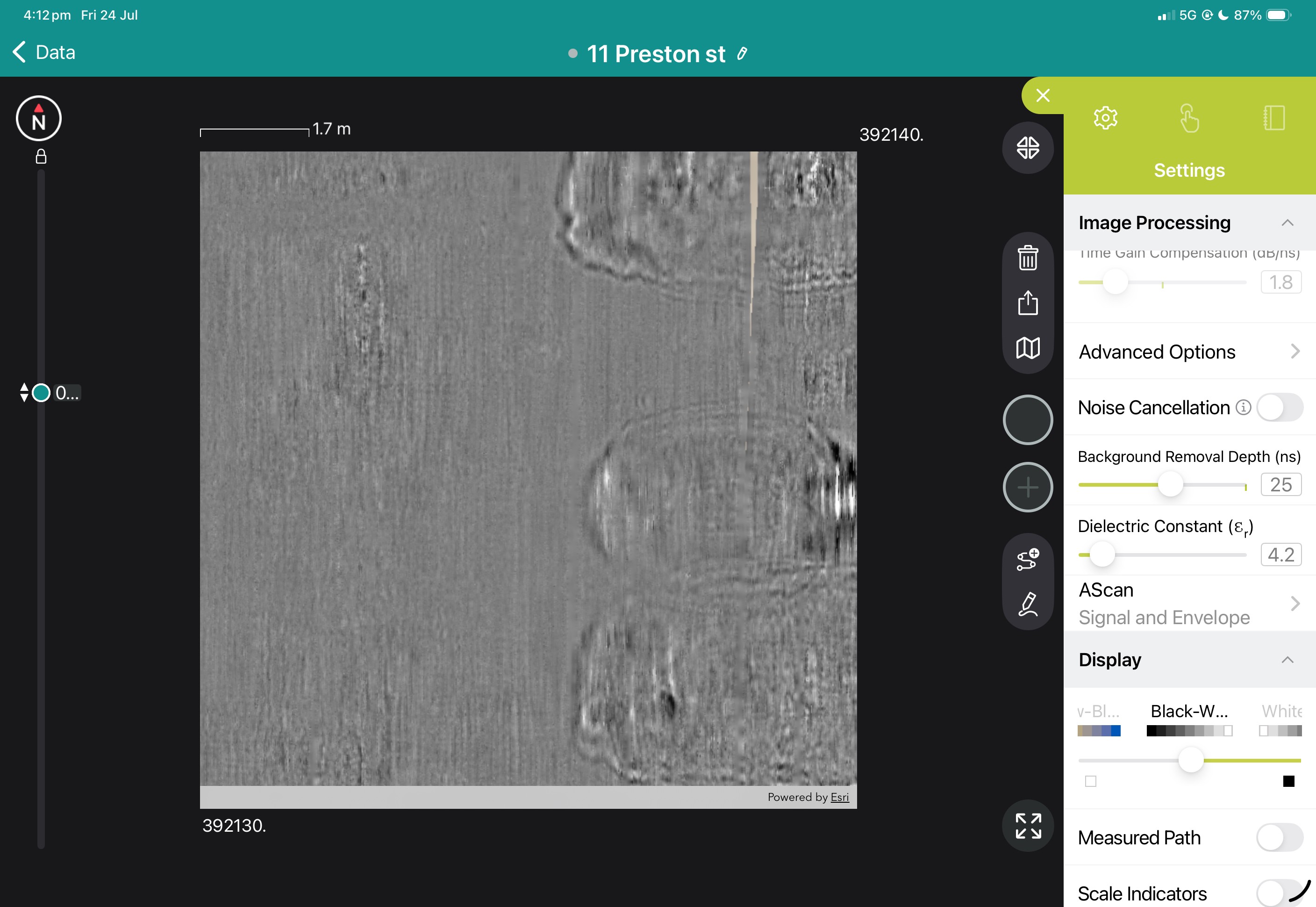
Book a Structural Assessment Demonstration
GS9000 cart with:

Manufacturer Technical Data Sheet for the GP8800
GPR Grid Paper - 5cm Grid Spacing
GPR Grid Paper with 10 cm grid spacing.
Printable GPR Augmented Reality Marker, for use with AR Grid Scans.