One survey. Multiple structural answers.
September 3, 2024
We scanned the same slab in the same position with both instruments. The images highlight two strengths: the GP8800 separates shallow reinforcement more clearly, while the GP8000 reveals deeper targets.
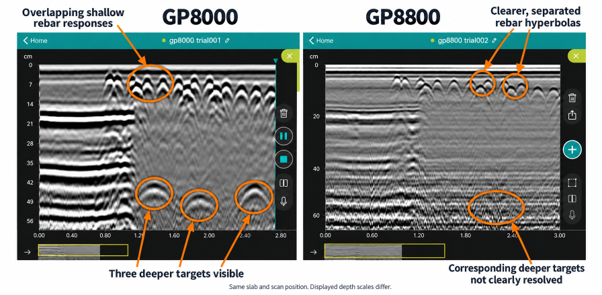
In this comparison, the GP8800 produces more distinct responses from the upper reinforcement. The characteristic arch shapes, known as hyperbolas, are more fully formed and less merged. This makes individual bars easier to distinguish where nearby responses overlap.
The GP8000 demonstrates its advantage deeper in the slab. Three deeper targets are visible in its scan but are not clearly apparent in the GP8800 image. For investigations extending below the upper reinforcement, that additional visibility can be valuable.
Both instruments use stepped-frequency continuous-wave (SFCW) technology, transmitting across a broad frequency range. Their different ranges help explain the balance between detail and penetration.
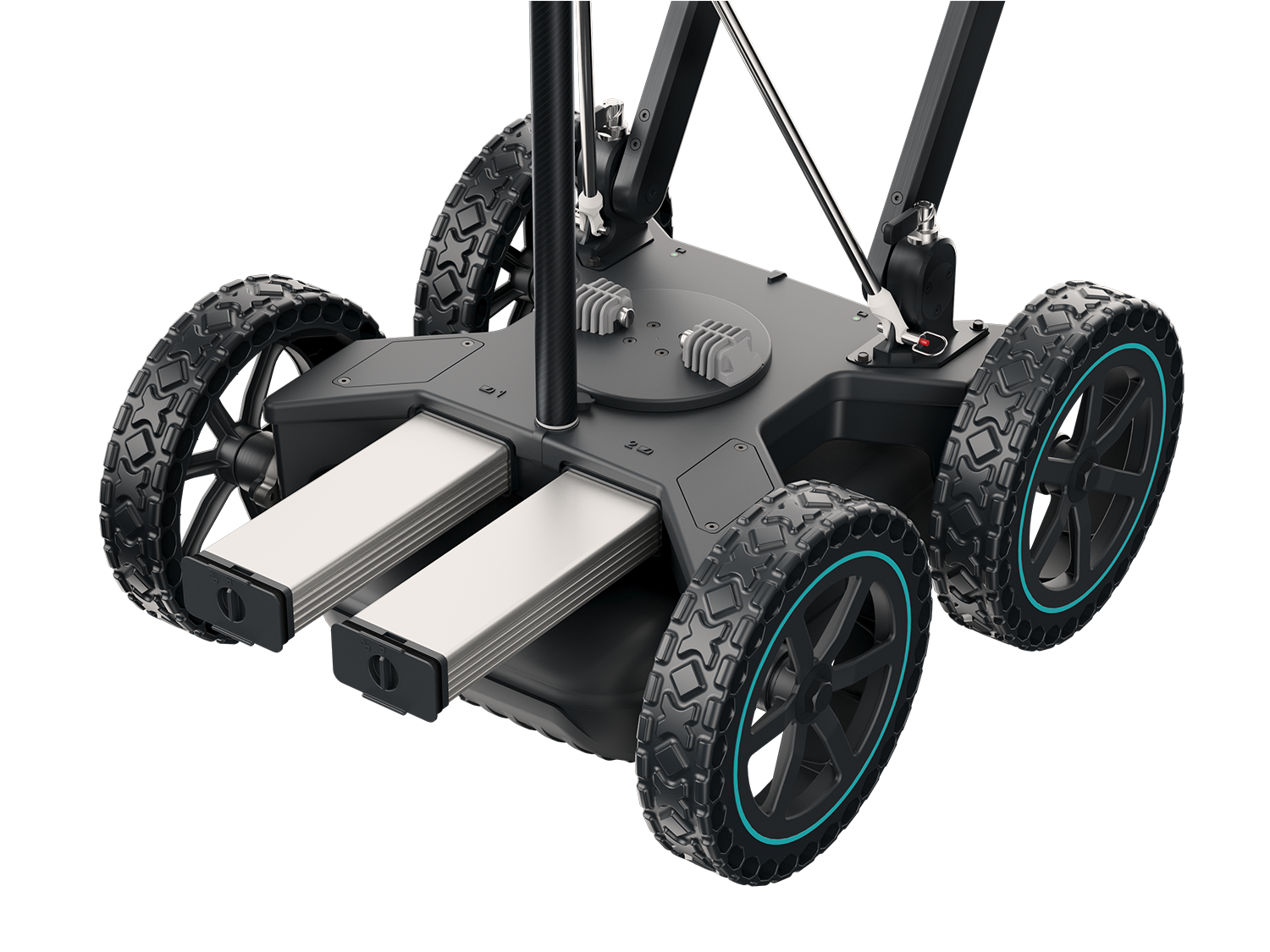
The GP8000’s lower frequency coverage supports deeper investigation, while the GP8800’s higher frequencies support finer shallow detail. Its compact size also helps when working near walls, beneath pipes and in restricted spaces. Achievable depth varies with concrete condition, moisture, reinforcement and target characteristics. Manufacturer specifications: GP8000 and GP8800.
For congested reinforcement and detailed scanning in tight spaces, the GP8800 is a strong option. Distinguishing adjacent bars helps operators map reinforcement and assess potential drilling or coring locations.
For thicker concrete and investigations requiring visibility of deeper embedded objects, the GP8000 offers greater penetration capability.
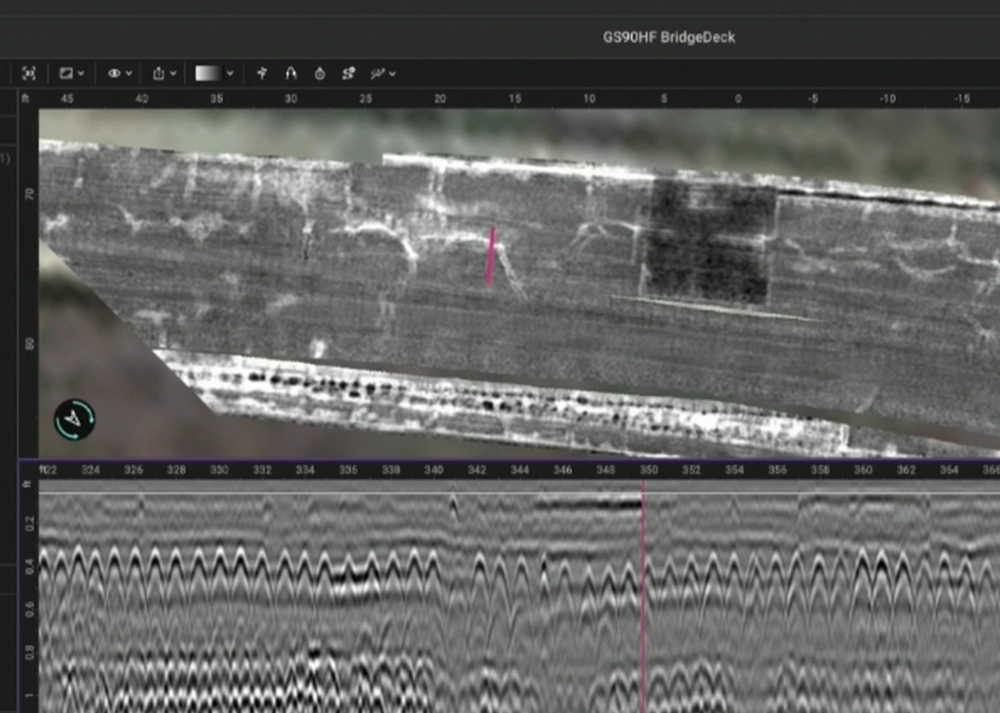
Concrete GPR can help locate reinforcement, post-tensioning ducts and conduits before cutting or coring. It can also support slab thickness assessment where the bottom reflection is visible, investigate suspected larger voids, and map embedded features during building, bridge and pavement assessments.
Our scans demonstrate why both models have a place in concrete investigation. Choose the GP8800 when shallow detail and access are the priorities, and the GP8000 when deeper visibility matters.
Contact our team to discuss the right Proceq GPR for your next concrete scanning application.

Reuben is PCTE's Managing Director and has been using and training users of GPR for more than 20 years.